

Tax Year-End Planning Starts Now: What International Founders Need to Know
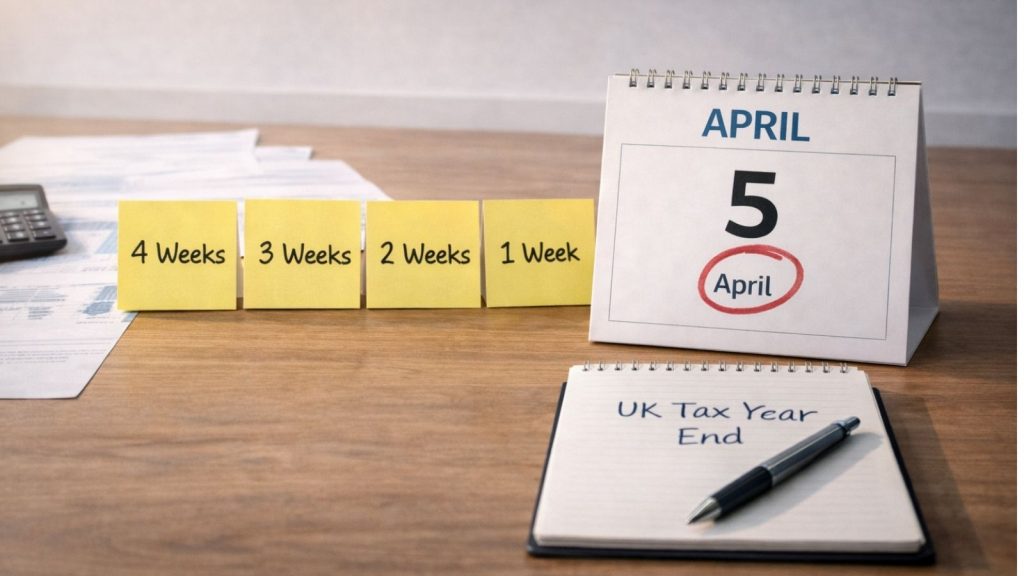
The UK tax year ends on 5 April 2026, and accountants across the country are advising business owners to begin year-end planning now.
With only a few weeks left before the deadline, founders should review their financial position to avoid missing deductions, filing errors, or unnecessary tax liabilities.
For international founders running a UK company, the deadline can be confusing because most countries follow a calendar year tax system. The UK tax system is different, and failing to prepare early can lead to lost tax savings or compliance issues.
This guide explains the key UK tax thresholds for 2026 and provides a practical 5-week tax year-end checklist to help founders prepare before the deadline.

Key UK Tax Thresholds for the 2025/26 Tax Year
Understanding the main tax thresholds helps make smarter decisions about salaries, dividends, and company expenses.
Income Tax Higher Rate Threshold
The higher rate income tax threshold is £50,270.
Income above this amount is taxed at a higher rate, which makes salary planning and dividend strategy important for company directors.
Dividend Allowance
The dividend allowance is £1,000, which was reduced from £2,000 in previous years.
This means company owners can receive up to £1,000 in dividends tax-free during the tax year.
VAT Registration Threshold
The VAT registration threshold remains £85,000.
If your company’s taxable turnover exceeds this threshold, you must register for VAT.
Corporation Tax Rates
Corporation tax depends on the level of profits.
• 19 percent for profits under £50,000
• 25 percent for profits above £250,000
Companies with profits between these levels may receive marginal relief, resulting in a gradual increase between the two rates.

Why the UK Tax Year Confuses International Founders
Most countries use either a calendar year or a corporate fiscal year for tax reporting.
The UK uses a unique tax calendar that runs from 6 April to 5 April.
Because of this, many international founders:
• miss important deductions
• forget to plan dividend payments
• delay bookkeeping until the last minute
• misunderstand VAT or corporation tax obligations
Waiting until the final weeks before the tax year ends can make it harder to optimise tax planning.
Starting early gives founders more flexibility.
4-Week UK Tax Year-End Checklist for Founders
Instead of leaving everything for the final days, follow this 4-week tax planning checklist to prepare properly.
Week 1: Review Allowable Business Expenses
Start by reviewing all allowable business expenses recorded during the tax year.
Check that expenses such as:
• software subscriptions
• equipment purchases
• marketing costs
• professional services
• travel related to business
are properly documented and included in your accounting records.
Adding legitimate expenses before the tax year ends can reduce your taxable profit and lower your corporation tax bill.
Week 2: Review Dividends and Director Compensation
Next, evaluate how you are paying yourself as a company director.
The dividend allowance for the 2025/26 tax year is £1,000, so it is important to confirm how much you have already used.
Some founders issue dividends before the tax year ends to optimise their personal tax position.
Make sure that any dividend payments are properly documented with board minutes and dividend vouchers to remain compliant with UK company law.
Week 3: Check VAT and Bookkeeping Compliance
In week three, review your VAT position and bookkeeping records.
If your company’s turnover is approaching the £85,000 VAT registration threshold, you may need to register for VAT.
Also confirm that your bookkeeping is fully up to date.
HMRC continues expanding Making Tax Digital requirements, meaning businesses must maintain accurate digital financial records. Companies that fail to keep proper records risk penalties.
Week 4: Estimate Corporation Tax and Prepare for Filing
In the final week before the tax year ends, estimate your corporation tax exposure based on your company profits.
Corporation tax rates currently are:
• 19 percent for profits under £50,000
• 25 percent for profits over £250,000
Companies between those thresholds receive marginal relief.
At this stage you should also:
• confirm that all expenses are recorded
• ensure dividend documentation is complete
• review financial statements with your accountant if needed
Planning your tax position before 5 April helps you avoid last-minute stress and unexpected tax liabilities.
The Risk of Waiting Until April
Many founders leave tax preparation until the final weeks of the tax year.
This creates several problems:
• missed tax deductions
• rushed bookkeeping
• incorrect filings
• unnecessary tax payments
Proactive planning helps founders stay compliant and potentially reduce their tax bill.
How Launchese Helps International Founders Stay Compliant
Running a UK company from abroad involves more than just company formation.
International founders must manage:
• bookkeeping
• tax compliance
• dividend planning
• HMRC reporting
• VAT obligations
Launchese helps founders simplify these processes through compliance and accounting support tailored to international entrepreneurs.
If you are unsure whether your company is prepared for the tax year end, getting advice early can save time, stress, and money.
Check Your Company Before 5 April
The UK tax year deadline is approaching quickly.
If you are an international founder, this is the right moment to review your financial records and tax strategy.
Book your free 15-minute advisory call today to check if your UK company is compliant before the 5 April deadline.