

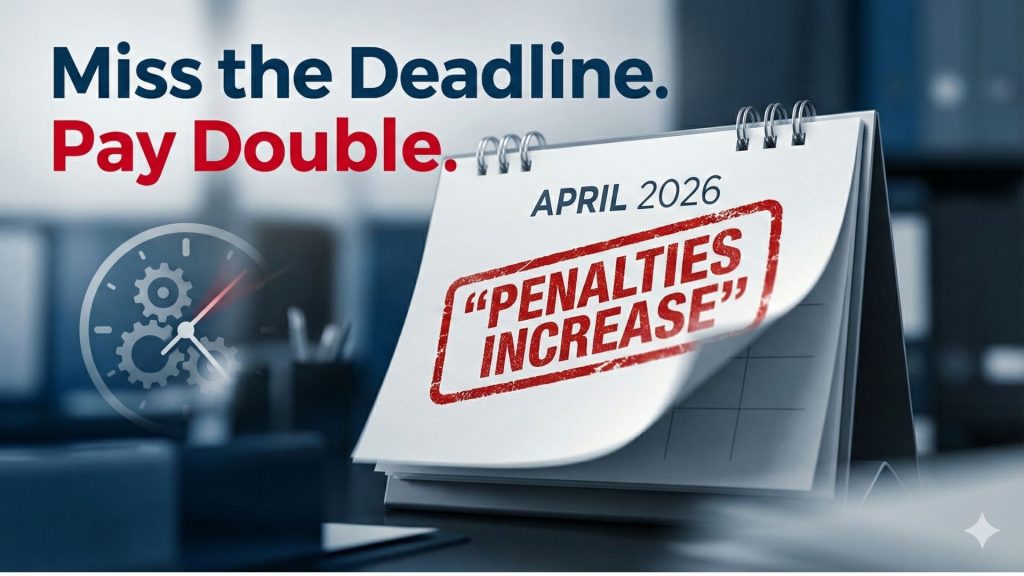
This guide explains what is changing, why it is happening, who is affected, and how you can protect your business from unnecessary financial penalties.
Why Are the Penalties Increasing?
Corporation Tax late filing penalties were originally set in the Finance Act 1998. Over nearly 30 years, inflation has reduced their real value by around half.
According to Budget 2025, the government is increasing penalties to restore their original real terms value and strengthen their behavioural impact. In simple terms, the government believes the current penalties are no longer strong enough to encourage timely filing.
The policy objective is clear: increase compliance and reduce late submissions.
When Do the New Penalties Apply?
The increased penalties apply to Corporation Tax returns where the filing deadline falls on or after 1 April 2026.
If your accounting period ends in mid-2025 but your filing deadline falls after 1 April 2026, the new penalty regime may apply to you. Directors should review their accounting periods now to avoid surprises.
New vs Current Penalty Amounts
Here is the full breakdown under Schedule 18 of the Finance Act 1998:
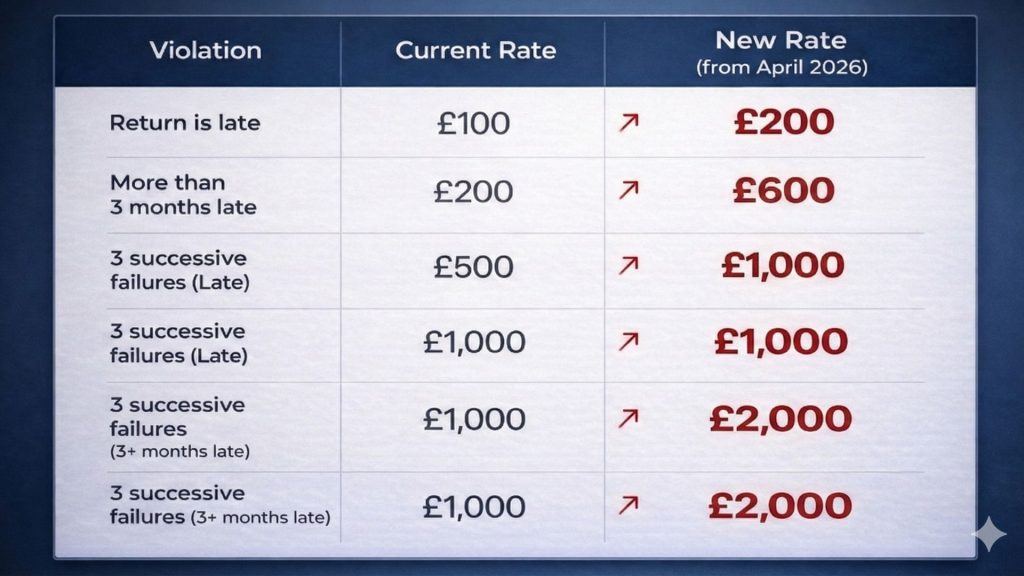
These are fixed penalties and apply regardless of whether your company owes tax.
Important: Even Dormant Companies Must File
Many directors mistakenly believe that if their company has:
- No trading activity
- No profit
- No Corporation Tax due
they do not need to file.
This is incorrect.
Dormant companies are still required to submit Corporation Tax returns unless HMRC has formally notified them otherwise. The penalties apply even when zero tax is owed.
What About Repeated Late Filing?
The most severe increases apply to companies with three successive late filings.
If you repeatedly file late, the penalties double again:
- Three consecutive late returns: £1,000
- Three consecutive returns more than 3 months late: £2,000
This is where penalties can start seriously impacting margins, especially for small or international founders who may already be managing cross-border complexity.
Financial Impact on the Government
According to Budget 2025 projections certified by the Office for Budget Responsibility, the government expects the measure to raise:
- £45 million in 2026 to 2027
- £60 million in 2027 to 2028
- £65 million annually in subsequent years
This clearly signals that HMRC expects a meaningful behavioural change or, alternatively, significant additional revenue from non-compliance.
Who Is Affected?
This measure affects:
- All incorporated UK businesses
- Trading companies
- Dormant companies
- Civil society organisations that file Corporation Tax returns
It does not impact individuals directly.
Compliant businesses that file on time will see no change.
Non-compliant businesses will face significantly higher financial consequences.
Why This Matters More for International Founders
For non-UK resident directors or international entrepreneurs, the risk is often higher because:
- UK tax deadlines differ from home country systems
- You may assume your accountant is handling everything
- You may believe no tax liability means no filing requirement
- You may not actively monitor HMRC correspondence
HMRC does not differentiate between a busy founder and a non-compliant company. Automated penalties are issued regardless of intent.
Practical Steps to Stay Compliant
Here is a practical compliance checklist:
1. Know Your Filing Deadline
Your Corporation Tax return (CT600) is due 12 months after the end of your accounting period.
Corporation Tax payment is due 9 months and 1 day after your accounting period ends.
These are two separate deadlines.
2. Use Accounting Software Properly
Platforms such as Xero or QuickBooks can:
- Track accounting periods
- Generate reminders
- Prepare draft reports
However, software alone does not replace professional review.
3. Do Not Ignore Dormant Status
If your company is not trading:
- Confirm whether HMRC still expects a return
- File on time even if the figures are zero
- Maintain proper confirmation with Companies House
4. Avoid Successive Failures
Repeated late filings are what trigger the most severe penalties. One mistake is costly. Three mistakes are expensive.
Build a system that prevents repeat delays.
5. Work with Experienced Advisors
UK Corporation Tax rules can be complex, particularly for:
- E-commerce businesses
- International shareholders
- Cross-border directors
- Companies with overseas revenue
Professional oversight reduces the risk of both penalties and technical filing errors.
Will This Affect the Economy?
The government states that the measure is not expected to have significant macroeconomic impact.
It is purely a compliance and behavioural adjustment designed to close the tax gap.
There are no significant IT or operational changes required from HMRC’s side. The system already exists. The numbers are simply changing.

The key takeaway is simple:
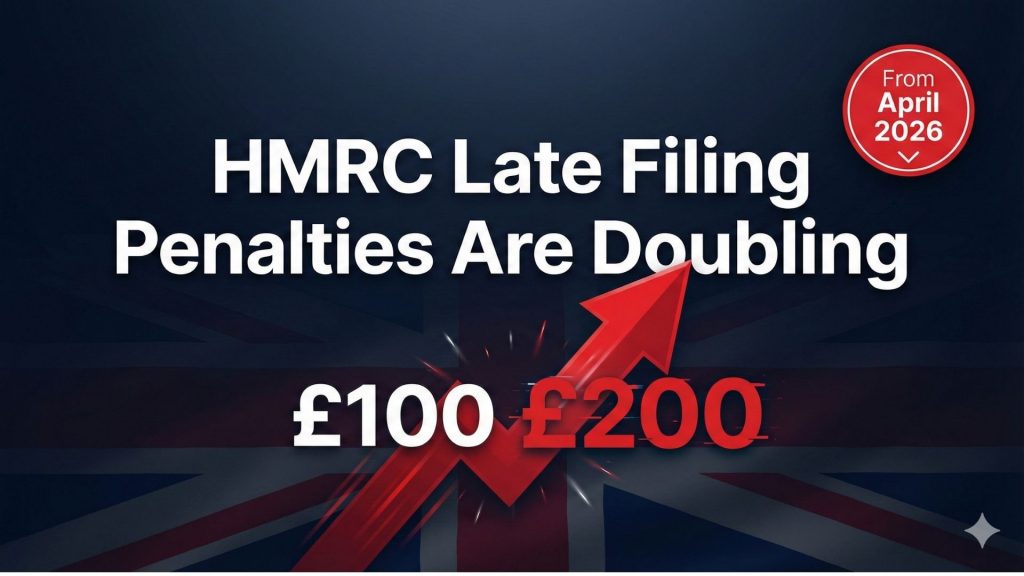
From April 2026, being late will cost you double.
If your margins are tight, a £200 to £400 penalty for something administrative can quickly become frustrating and avoidable.
For founders focused on growth, fundraising, product development, or international expansion, compliance often feels secondary. But HMRC penalties are automated and unforgiving.
The safest strategy is proactive compliance.
Review your accounting period today.
Confirm your filing dates.
Ensure your accountant or internal team has clear responsibility.
Administrative discipline protects profit.
If you are unsure about your UK filing obligations or want to streamline your compliance structure, consider speaking with a qualified tax advisor or a compliance specialist familiar with international founders.
Staying ahead of deadlines is far cheaper than paying for missing them.
Book your free 15-min advisory call today to stay one step ahead.