

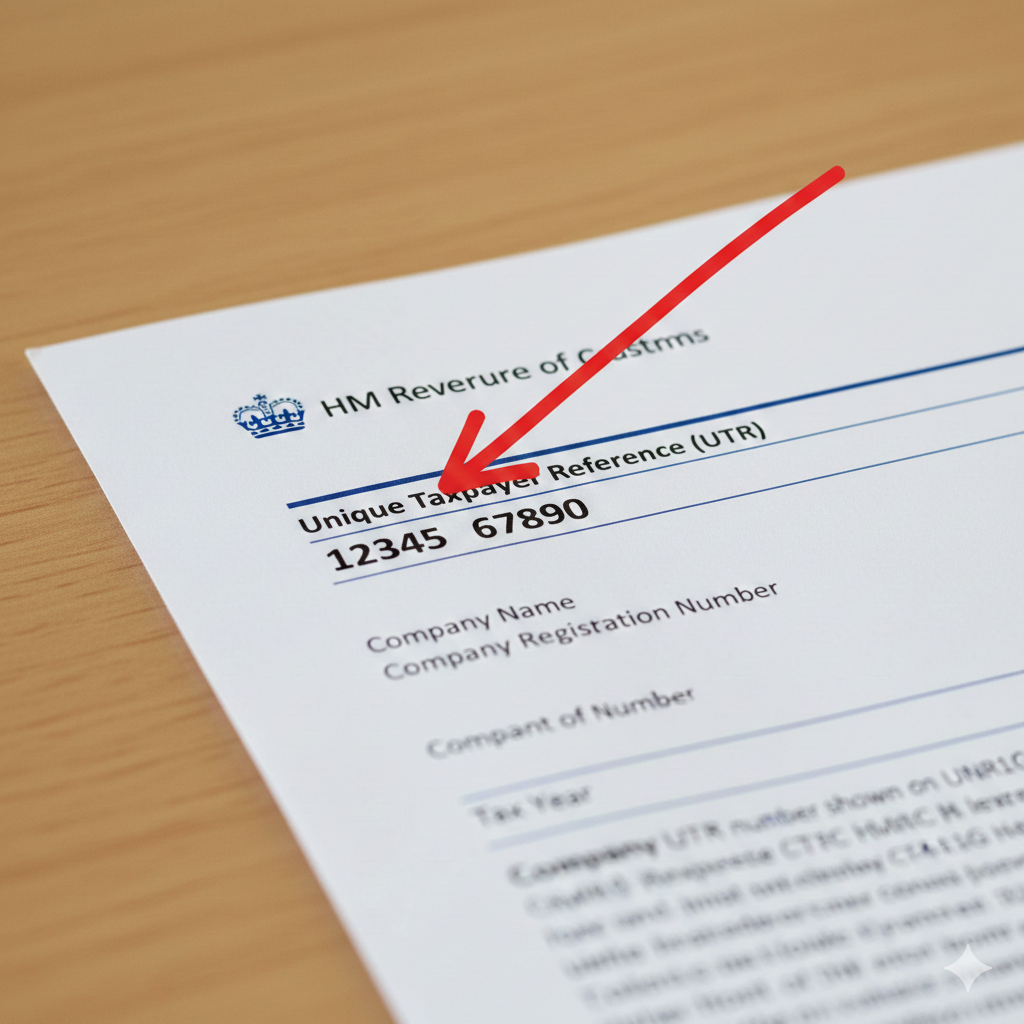
Every limited company registered in the UK gets a company UTR number. It’s one of those things nobody explains to you when you start a business — until the moment you urgently need it and can’t find it anywhere.
Maybe your accountant is asking for it. Maybe Stripe flagged your account. Maybe you just received an HMRC letter full of numbers and you’re not sure which one matters. If you’re an international founder who registered a UK company, there’s a good chance your company UTR number is sitting in an unopened letter at a UK address you’ve never visited.
This guide covers everything: what UTR stands for, what your company UTR number actually looks like, how to find it if you’ve lost it, and what happens if you don’t have it when you need it.
What Does UTR Stand For? (UTR Number Meaning)
UTR stands for Unique Taxpayer Reference. It’s a number that HMRC — the UK’s tax authority — assigns to identify your company in the UK tax system.
Think of it this way: your Company Registration Number (CRN) is your ID with Companies House. Your VAT number (if you have one) is for sales tax. But your company UTR number is specifically what connects your limited company to HMRC’s Corporation Tax system.
Without it, you cannot file your Corporation Tax return. Full stop.
Every UK limited company gets a UTR automatically after incorporation. HMRC doesn’t ask if you want one — they just create it and post it to your registered office address. The same applies to LLPs: if you’ve registered an LLP, HMRC assigns an LLP UTR number in the same way.
What Does a Company UTR Number Look Like?

Your company UTR number is a 10-digit number. That’s it — just 10 digits, no letters, no special characters.
It usually appears on the first HMRC letter your company receives after incorporation (a form called CT41G). On that letter, it’s typically labelled as your “Unique Taxpayer Reference” or “Tax Reference.”
Here’s how to tell it apart from your other company numbers:
If you see a 10-digit number on any HMRC correspondence about Corporation Tax — that’s your company UTR number.
Important: Your company UTR is different from your personal UTR. If you’re a director who also files Self Assessment (for dividends, for example), you’ll have two separate UTR numbers — one for you personally and one for your company. Make sure you’re using the right one for the right filing.
How to Find Your Company UTR Number
This is the question we hear most often from founders. You know you need it, but you don’t know where it is. Here are your options, starting with the quickest.
Check Your HMRC Online Account
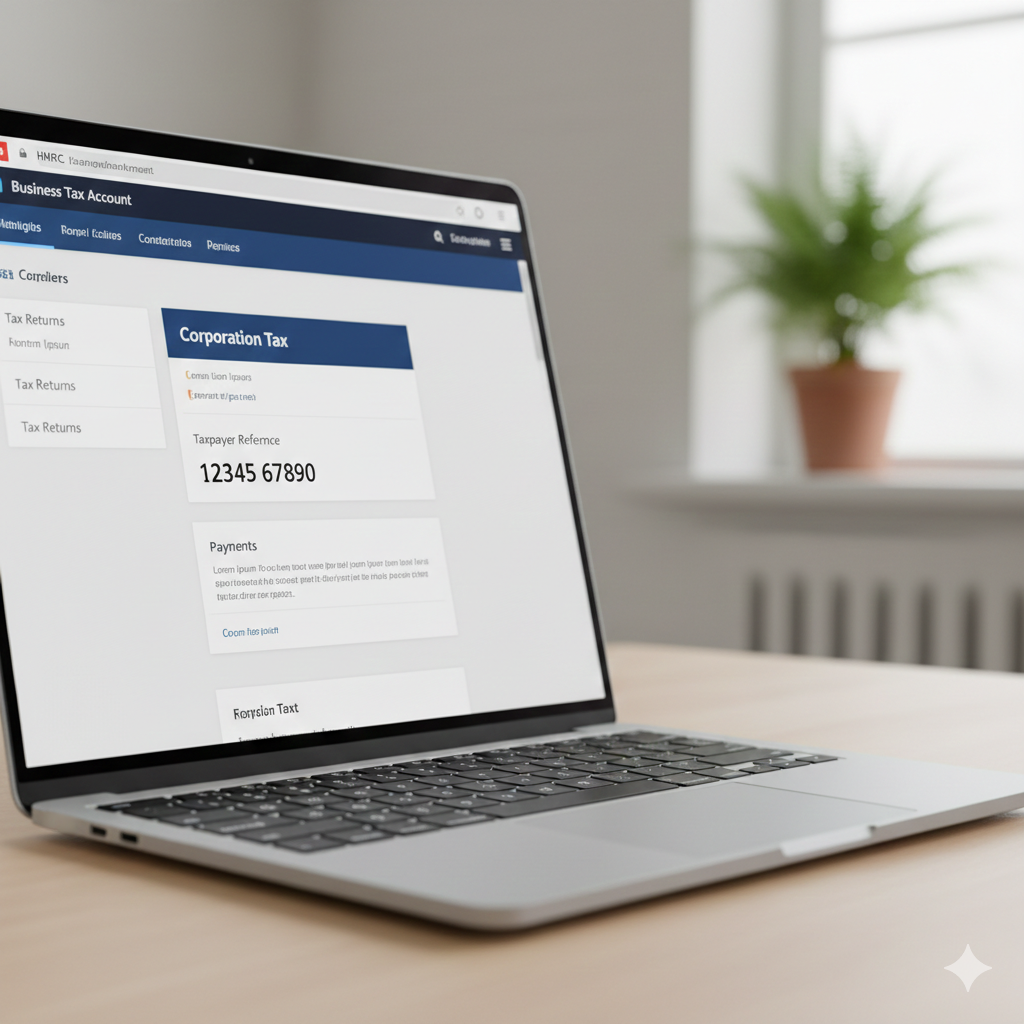
If you’ve already set up a Government Gateway account for your company, log in and look in the Corporation Tax section. Your company UTR number should be displayed there.
This is the fastest route if you’ve already registered — log in to your Government Gateway account here.
Check Previous HMRC Letters
Any letter from HMRC about your company’s Corporation Tax will include your UTR number. Look for the CT41G letter that arrived after you incorporated, or any subsequent annual reminders.
Ask Your Accountant
If you’ve ever filed a Corporation Tax return through an accountant, they’ll have your company UTR number on file. A quick email usually sorts this out.
Call HMRC Directly
You can contact HMRC’s Corporation Tax helpline:
- From the UK: 0300 200 3410
- From outside the UK: +44 161 931 9070
They can verify your identity and confirm your UTR over the phone. However, they will only re-send the UTR letter by post to your registered office address — they won’t email it to you, for security reasons.
Request a Reissue
If the original CT41G letter never arrived (or went to an address you can’t access), you can request HMRC to re-send it. Just be aware: they’ll post it to your registered office address again. If that address hasn’t changed, you’ll hit the same problem.
This is where international founders run into a cycle: you request the UTR, HMRC sends it to a UK address, you’re not in the UK to collect it, and by the time it reaches you (if it ever does), a deadline may have already passed.
How to Get a Company UTR Number (New Companies)
If you’re registering a new UK limited company, here’s what happens with your UTR automatically.
Step 1: Register Your Company
When you incorporate through Companies House (or through a formation agent like Launchese), Companies House notifies HMRC on your behalf. You don’t need to file a separate application for a UTR.
Step 2: HMRC Creates Your Corporation Tax Record
Within a few days of incorporation, HMRC sets up a Corporation Tax record for your company and generates your company UTR number.
Step 3: HMRC Posts the CT41G Letter
HMRC sends a letter (form CT41G) to your registered office address containing your UTR. Typical delivery times:
- UK addresses: 14–21 days after incorporation
- Overseas addresses: 6–8 weeks after incorporation
Step 4: Register for Corporation Tax Online
Even though HMRC creates your UTR automatically, you still need to register for Corporation Tax within 3 months of starting business activities. This is done through your Government Gateway account, where you’ll confirm your company’s accounting period and other details.
The catch for international founders: If your registered office is a virtual address in the UK (which it likely is if you don’t live there), that CT41G letter lands in a mailbox you may never check. By the time you realise you need the UTR, it could have been sitting there for months.
Why Your Company UTR Number Matters: The Real Consequences
Your company UTR number isn’t just bureaucracy. Here are the three situations where not having it will actually cost you.
1. Corporation Tax Filing (CT600)
Every UK limited company must file a CT600 Corporation Tax return with HMRC — even if your company made zero profit or was completely dormant. You need your company UTR number to file it.
The filing deadline is 12 months after your accounting period ends. Your actual tax payment is due 9 months and 1 day after the period ends.
Miss the filing deadline and HMRC doesn’t send a reminder — they send a fine:
- 1 day late: £100 automatic penalty
- 3 months late: Another £100
- 6 months late: HMRC estimates your tax bill and adds 10% as a penalty
- 12 months late: Another 10% of your estimated bill
Critical update for 2026: These penalties are doubling from April 2026. The £100 day-one fine becomes £200. The three-month penalty becomes £200 too. If you’ve been late three consecutive times, the initial penalty jumps to £500.
The UK government expects to collect an additional £60 million per year from these increased penalties. Don’t let your company be part of that number.
2. Payment Processors (Stripe, Wise, PayPal)
Here’s something that catches many founders off guard. You set up Stripe, start processing payments, everything works — until about 90 days in, when Stripe’s compliance systems flag your account.
Stripe requires UK businesses to provide a valid tax identification number. For UK limited companies, that means your UTR or VAT number. If Stripe hasn’t verified a tax ID after several months of trading, your account can face restrictions: delayed payouts, limited transactions, frustrated customers.
This isn’t unique to Stripe. Wise, PayPal, and other payment processors have similar requirements. But Stripe’s automated checks tend to surprise founders because they kick in after you’ve been trading happily for weeks.
The fix is simple — provide your company UTR number. But if you don’t have it, you’re stuck.
3. The Vicious Cycle for Non-Resident Founders
Here’s the pattern we see play out repeatedly:
- You incorporate your UK company
- HMRC sends your UTR to your UK registered office
- You’re abroad and don’t receive it
- Months pass — your accounting period ends
- Your accountant asks for your company UTR number to file your CT600
- You don’t have it
- You request it from HMRC — they post it to your UK address again
- By the time it reaches you, you’ve missed the deadline
- Automatic £100–£200 fine
This cycle is entirely avoidable — if you have a reliable way to receive and forward HMRC correspondence.
Corporation Tax UTR: The Filing Connection
Your company UTR number and Corporation Tax are inseparable. You’ll see the terms “corporation tax UTR” or “CT UTR” used interchangeably — they all refer to the same 10-digit number.
When your accountant (or accounting software like Xero or FreeAgent) asks for your “Corporation Tax UTR,” they mean your company UTR number. It’s what they enter into the CT600 form to tell HMRC which company the filing belongs to.
If you enter the wrong UTR — for example, your personal UTR instead of your company’s — HMRC won’t match the filing to your company. This can cause rejected returns, delayed processing, or compliance queries that take weeks to resolve.
Quick rule: Filing a CT600 (Corporation Tax)? Use your company UTR. Filing Self Assessment (personal income, dividends)? Use your personal UTR.
How Launchese Solves the UTR Problem
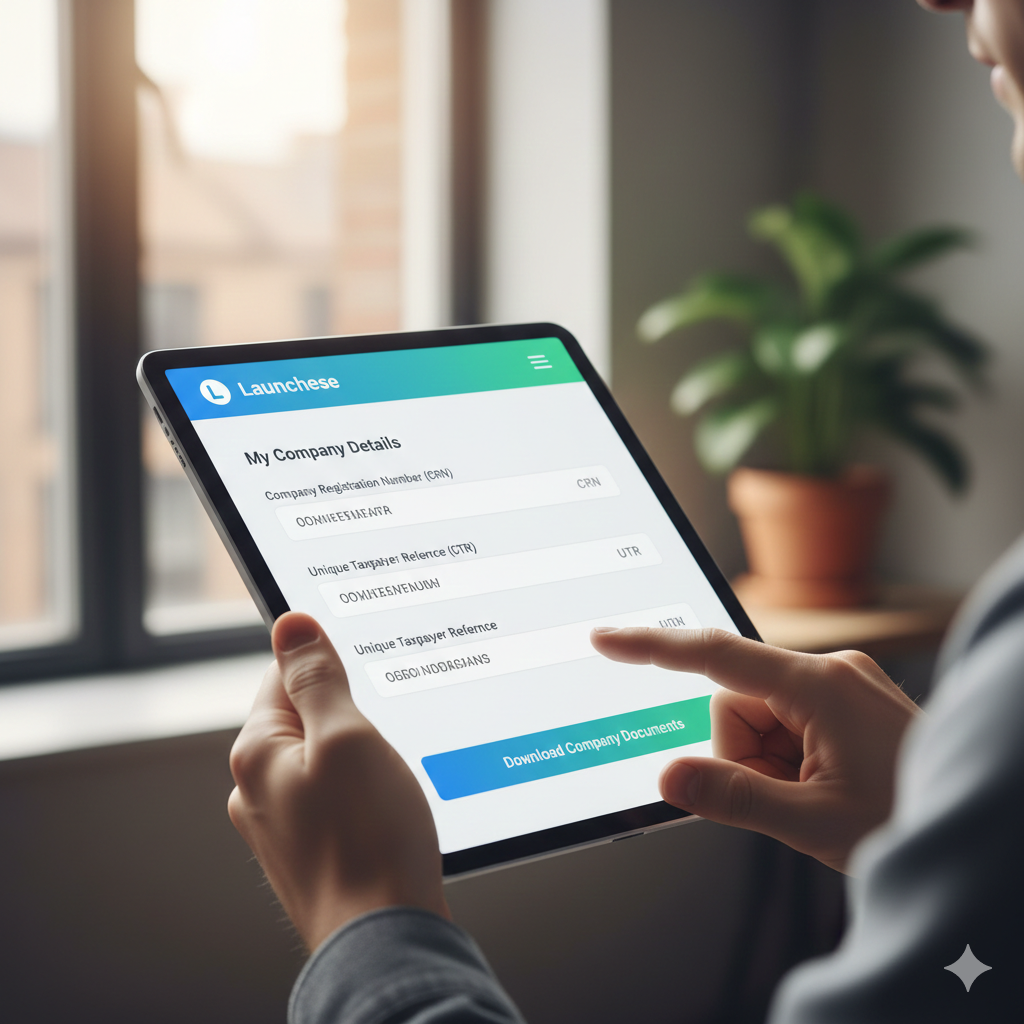
At Launchese, we’ve helped over 10,000 founders from 100+ countries navigate exactly this situation. Our UTR Retrieval and Verification service removes the biggest compliance bottleneck for non-resident founders.
Here’s how it works:
- We receive your HMRC correspondence at your Launchese registered address
- We scan and digitise the letter, including your company UTR number
- We verify the UTR against HMRC records to confirm it’s active and correct
- We deliver it to you digitally — no waiting for international post, no missed letters
This is especially important if you’re in a time-sensitive situation — like Stripe asking for your tax ID, or your accountant chasing you before a filing deadline.
Whether you’re in Lagos, Istanbul, Dubai, São Paulo, or anywhere else, you get your company UTR number within days of HMRC sending it — not weeks or months.
Frequently Asked Questions
How long does it take to get a company UTR number?
HMRC typically posts your company UTR within 14–21 days of incorporation for UK addresses. If your registered office is overseas, expect 6–8 weeks. If you haven’t received it within that timeframe, check your Government Gateway account or contact HMRC.
Can I find my company UTR number online?
Yes — if you’ve set up a Government Gateway account for your company, your UTR should appear in the Corporation Tax section. However, if you’ve never registered online, HMRC will only send the UTR by post to your registered office. They won’t email or text it.
What is the difference between a company UTR and a personal UTR?
Your company UTR identifies your limited company for Corporation Tax purposes. Your personal UTR identifies you as an individual for Self Assessment. They are completely separate numbers, even though they’re both 10 digits and both issued by HMRC. Always check which one is being requested.
Do I need a UTR number for Stripe?
Stripe requires UK businesses to provide a valid tax identification number as part of their compliance checks. For UK limited companies, this is typically your company UTR number or your VAT number. Providing your UTR usually resolves Stripe’s tax ID verification requests.
Is a UTR number the same as a Company Registration Number?
No. Your Company Registration Number (CRN) is issued by Companies House and identifies your company legally. Your UTR is issued by HMRC and identifies your company for tax purposes. They’re completely different numbers from different government bodies.
What does UTR stand for?
UTR stands for Unique Taxpayer Reference. It’s a 10-digit number assigned by HMRC to every UK limited company (and LLP) for tax identification. Every company gets one automatically after incorporation.
Can I use my personal UTR for my company’s Corporation Tax?
No. Your personal UTR and your company UTR are separate. Using the wrong one will cause your filing to be rejected or mismatched. Always use your company UTR for CT600 filings and your personal UTR for Self Assessment.
Don’t Let a Missing UTR Number Cost You Money
Your company’s UTR number is a small thing that creates big problems when you don’t have it. With HMRC penalties doubling from April 2026 and payment processors tightening their compliance checks, the cost of not having your UTR sorted is going up.
If you’re an international founder running a UK company — get your UTR number secured now, not when someone’s already asking for it.
This article is for general informational purposes only and does not constitute legal, tax, or financial advice. For advice specific to your situation, please consult a qualified tax professional or accountant. Penalty amounts and HMRC processes described are accurate as of February 2026 and may change. Bank account openings and payment processor approvals are subject to eligibility and provider requirements.