

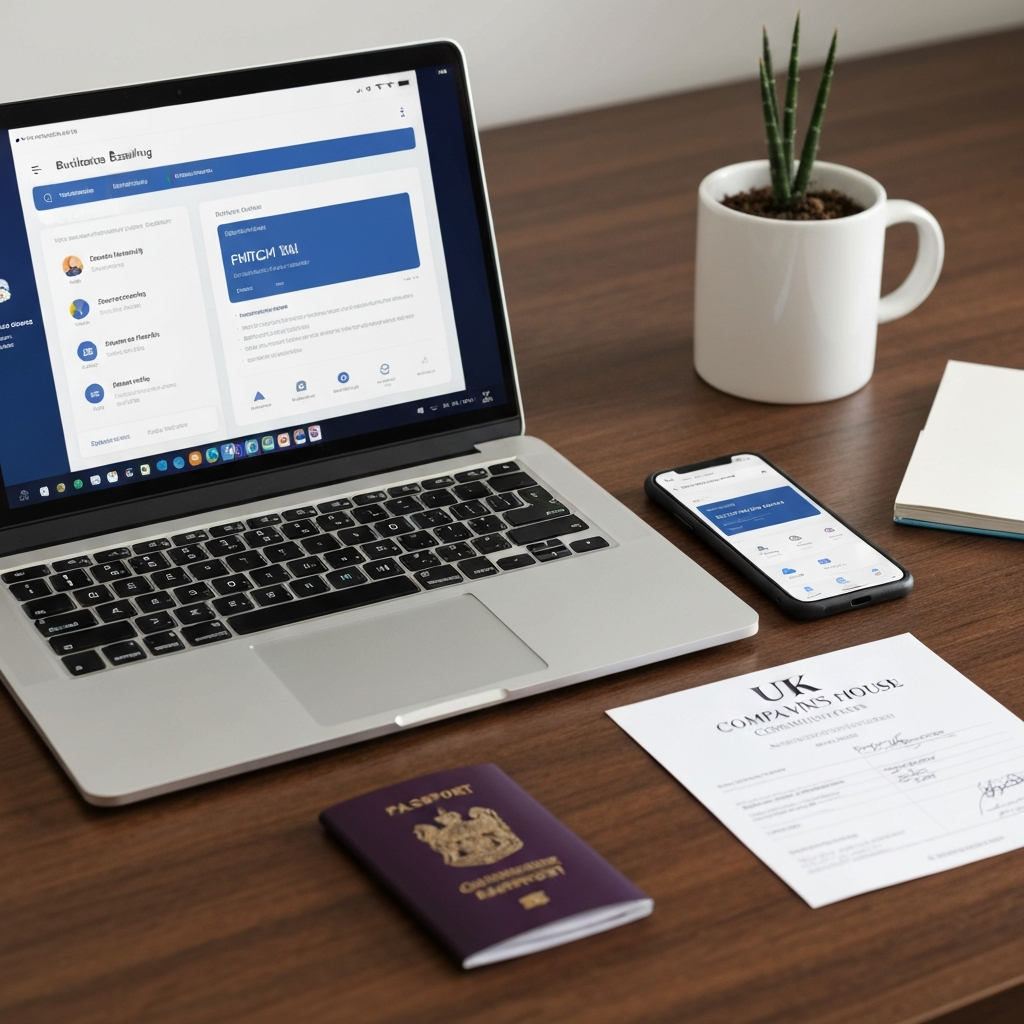
Yes, a tide business account non uk resident director can apply in 2026, but you’ll go through enhanced due diligence and you’ll need a UK-registered company plus solid identity documents. Tide doesn’t require you to live in the UK to open a business account. What it does require is a company registered at Companies House, a clean set of ID and address checks, and a business that fits its risk appetite. Get those right and non-residents are approved every week.
This guide breaks down exactly what Tide asks for in 2026, what non-resident founders actually experience during the process, how to apply step by step, and what to do if you get rejected. No fluff, just the checklist you need before you hit submit.

Can a non-UK resident director really open a Tide business account?
Short answer: yes. Tide is a UK fintech business bank with over 600,000 business customers, and it serves plenty of companies whose directors live abroad. There’s no rule saying you must hold a UK passport or a UK home address to be a director.
Here’s the nuance. Tide’s account belongs to the company, not to you personally. So the first thing it checks is the company: is it a real UK limited company registered at Companies House, with a legitimate UK address and a plausible business activity? After that, it verifies the people behind it, which means you as a director.
Non-UK resident directors trigger extra checks. That’s normal. Banks and fintechs run enhanced due diligence (EDD) on applicants who don’t have a UK footprint because they can’t rely on domestic credit records. Passing EDD is about giving clear, consistent documents, not about luck.
Does Tide accept non UK residents?
Tide accepts non-UK residents who are directors of a properly registered UK company. It does not offer accounts to sole traders or companies registered outside the UK. If your only entity is registered in, say, Dubai or Delaware, Tide isn’t the route. Form a UK Ltd first, then apply.
Some nationalities and some high-risk business types face more scrutiny or outright decline. That’s true of every UK bank, not just Tide. We cover what to do if that happens further down.
Tide business banking requirements in 2026
Before you apply, check your company and your documents against Tide’s core requirements. Here’s the 2026 eligibility checklist.
Company requirements
- Registered at Companies House. Your business must be a UK limited company (or LLP) with a live Companies House number.
- A UK registered office address. This is the official address on your Companies House record. A virtual office or forwarding address is fine as long as it’s genuine and post reaches you.
- A clear business activity. Vague or restricted trades (gambling, adult, crypto trading, certain financial services) can trigger a decline.
- Correct SIC code. The activity you declare should match your Companies House SIC code.
Director and identity requirements
- Valid government photo ID. A passport is best for non-residents. National ID cards are sometimes accepted depending on country.
- A verifiable residential address. Your real home address abroad, backed by a document if requested (utility bill, bank statement, tenancy).
- Proof of who controls the company. Directors and anyone owning 25% or more (persons with significant control) get verified.
- A working smartphone. Tide’s onboarding runs through the app, including a live selfie check.
Tide business account requirements 2026 at a glance
| Requirement | Needed for non-UK residents? |
|---|---|
| UK company registered at Companies House | Yes, mandatory |
| UK registered office address | Yes, mandatory |
| Government photo ID (passport) | Yes |
| Proof of residential address | Sometimes requested during EDD |
| UK residency of director | No, not required |
| Smartphone for app onboarding | Yes |
| Live selfie verification | Yes |
If you’re still at the setup stage, our UK company registration guide for foreign entrepreneurs walks through forming the Ltd company that Tide needs to see first.
The non-UK resident director question: theory vs practice
On paper, Tide’s rules don’t block non-residents. In practice, the experience varies, and knowing why saves you time.
What Tide says: it welcomes UK companies with international directors and runs additional checks where needed.
What founders actually experience:
- Faster approvals when the company is clean, the address is solid, and the passport photo is crisp. Some non-residents are approved within a day or two.
- Requests for extra documents during EDD. This is not a rejection. It means Tide wants to confirm your address or the source of funds. Respond quickly and accurately.
- Declines when the business activity looks high-risk, the address seems suspicious, or the director’s country is on a heightened list. Tide rarely explains the reason in detail.
The pattern is clear. The stronger and more consistent your paperwork, the smoother the process. Sloppy addresses and mismatched names are the biggest causes of friction. There are a lot of half-truths floating around about this, which we tackle in our post on common misconceptions about UK business banking.

How to apply for a Tide business account as a non-UK resident director
Here’s the practical sequence. Follow it in order.
- Form your UK limited company. You need a live Companies House number before Tide will look at you. If you haven’t done this, sort it first.
- Set up a real UK registered address. This goes on your Companies House record and matters to Tide. A genuine UK mail forwarding address keeps post flowing to you wherever you live.
- Download the Tide app. Onboarding runs on your phone. You can start through Tide via Launchese.
- Enter your company details. Tide pulls a lot straight from Companies House. Make sure your name and address match exactly.
- Verify your identity. Scan your passport and take a live selfie. Good lighting, no glare, matching name spelling.
- Answer the business questions. Describe what you do plainly. Expected turnover, main customers, whether you’ll receive international payments.
- Respond to EDD requests fast. If Tide asks for proof of address or source of funds, upload clear documents the same day.
- Wait for the decision. Many non-residents hear back within days. Some take longer if EDD is heavy.
Two things trip people up. First, name mismatches between your passport and Companies House. Second, a registered address that looks like it can’t receive post. Fix both before you apply.
What to have ready before you apply
Gather these before you open the app. Having them ready cuts the process from weeks to days.
- Companies House number. Your eight-digit company registration number.
- Company name spelled exactly. As it appears on the register, including “Limited” or “Ltd”.
- UK registered office address. The one on your Companies House record.
- Valid passport. In date, clear photo page, name matching the register.
- Proof of your home address. A recent utility bill or bank statement in your name, in case EDD asks.
- Details of all PSCs. Anyone owning 25% or more of the company.
- A short business description. What you sell, who buys it, expected monthly turnover.
- Your smartphone. Charged, with a working camera for the selfie check.
If any detail on Companies House is wrong or outdated, correct it before applying. Tide reads that record directly, and mismatches slow everything down.
What happens if Tide rejects you: 3 solid alternatives
Rejection isn’t the end. Tide might decline for reasons that have nothing to do with you being a fraud risk, such as your business type or country. Here are three real paths forward.
1. Reapply after fixing the obvious issues
If your address looked shaky or your business description was vague, tidy those up and try again. A clean registered address and a plain, honest business summary solve a surprising number of declines.
2. Apply to other UK fintechs
Tide isn’t the only option. Several UK business banks and fintechs onboard non-resident directors. We compare the realistic choices in our guide to the best UK business bank account for non-residents. Different providers have different risk appetites, so a decline from one often means approval elsewhere.
3. Use a payment provider alongside a banking partner
Many founders run a business bank account for holding funds and a payment processor for taking card payments. Our ProLaunch package is built around banking and payment partners so you’re not stuck with a single point of failure.
Whichever route you take, the foundation is the same: a properly formed UK company with a credible address. Get that right and your options widen. It’s one of the reasons founders keep choosing the UK in 2026.

How Launchese helps you get Tide-ready
Most Tide declines for non-residents come down to preventable mistakes: a weak address, a mismatched name, a vague business activity. That’s fixable with the right setup and a bit of guidance.
Our Digital Pro Suite is built for exactly this. It includes:
- A Tide consultation so you know precisely what to submit and how to present it.
- An enhanced UK registered address that reads as credible during EDD.
- Ongoing support for digital businesses, from formation through banking.
If you’re scaling and also need VAT and accounting alongside consultations, the ScaleUp package layers those on top. Either way, you walk into the Tide application knowing what to expect rather than guessing.
You can also review Tide’s own onboarding guidance and the wider UK anti-money-laundering rules on GOV.UK, which explains why EDD exists in the first place.
Frequently asked questions
Can a non-UK resident director open a Tide business account?
Yes. A tide business account non uk resident director can apply, provided the company is registered at Companies House and the director passes Tide’s enhanced due diligence with valid ID and a credible address.
Does Tide accept non UK residents?
Tide accepts non-UK residents who are directors of a UK limited company. It does not offer accounts to sole traders or to companies registered outside the UK.
What documents do I need for Tide business account eligibility as a non-UK resident?
A valid passport, your Companies House number, a UK registered office address, and possibly proof of your residential address if Tide requests it during EDD. You also need a smartphone for the selfie check.
Do I need to live in the UK to be a company director?
No. UK company law does not require directors to be UK residents. You can form and run a UK Ltd from anywhere in the world.
Why might Tide reject a non-resident director?
Common reasons include a high-risk business activity, an address that looks unable to receive post, name mismatches between your passport and Companies House, or a country on a heightened-risk list.
What are the Tide business account requirements in 2026?
A UK company registered at Companies House, a UK registered office address, valid government photo ID, a live selfie verification, and a clear description of your business. UK residency is not required.
What if Tide says no?
Fix any obvious issues and reapply, try another UK fintech that onboards non-resident directors, or pair a banking partner with a payment processor. A properly formed UK company with a credible address keeps your options open.
How can Launchese improve my chances with Tide?
The Digital Pro Suite includes a Tide consultation and an enhanced UK registered address, so you submit the right documents the first time and reduce the chance of an avoidable decline.